
When you’re dealing with jaw pain, clicking/popping, headaches, or mysterious neck tension that just won’t quit, chances are you’ve heard the terms “TMJ” and “TMD” tossed around like they’re interchangeable. Spoiler alert: they’re not. But understanding the difference between TMD vs TMJ isn’t just about semantics.
It can be the key to unlocking lasting relief, especially for adults navigating the hidden world of tethered oral tissues like tongue, lip, and cheek ties.
So grab a seat, because we’re about to unpack the real deal behind these jaw-dropping acronyms (pun absolutely intended).
Examining how they connect to your oral anatomy, and what your next step should be if you’re stuck in the vicious cycle of clenching, grinding, or waking up wondering why your face hurts.
TMD vs TMJ: Let’s Get the Terms Straight
Let’s clear up these acronyms. TMJ stands for “temporomandibular joint”. That’s the anatomical name for the jaw joint itself. Everyone has a TMJ—two, as we consider the left and right sides individually.
TMD, on the other hand, stands for “temporomandibular disorder”. This refers to dysfunction, pain, or issues within that joint or the surrounding muscles and tissues.
In the showdown of “TMD vs TMJ”, it’s like comparing “knee” to “knee injury.” One is the structure; the other is the problem.
But in everyday conversation and even on social media, these terms often get tangled up worse than an untreated tongue tie.

Symptoms of TMD: More Than Just a “Jaw Thing”
Here’s where things get interesting—and frustrating—for many adults.
The symptoms of TMD often lead people down rabbit holes with dentists, ENTs, neurologists, and maybe even chiropractors before they land in the right chair (hint: a myofunctional therapist’s, preferably one who knows a thing or two about tethered oral tissues).
Common symptoms include:
Jaw pain or tenderness
- Clicking or popping when opening/closing your mouth
- Lockjaw (either stuck open or closed)
- Frequent headaches or migraines
- Ear pain or a sense of fullness
- Neck and shoulder tension
- Facial fatigue or soreness
- Difficulty chewing or speaking
Sound familiar? Now pair that with a tongue that’s tethered to the floor of your mouth or a cheek tie pulling your facial muscles off-center, and suddenly we’ve got a whole orchestra of dysfunction playing in your craniofacial region.
In fact, there is an overlap of symptoms when compared to oral ties. This is likely due to the fascia; we will get in-depth on this later. The fascia being bound may be the connection between oral ties and jaw pain.

This illustration of the oral, facial, and neck muscles shows how the muscles integrate or connect near and into the temporomandibular joint. It’s an all-roads-lead-home imagery, with the TMJ being home base.
If the muscle and the fascia are tethered due to a tie, the smooth, connected operating system is broken. The TMJ, being home base, will break down over time due to this dysfunction, causing a TMD.
TMD vs TMJ: Why the Confusion Is a Problem
The biggest issue with confusing TMD vs TMJ is that if you think TMJ is the problem, you might stop treating symptoms instead of getting to the root cause.
Let me explain.
Let’s say you’re experiencing jaw pain, and your dentist says, “It’s TMJ.”
What they often mean is, “You have some kind of jaw joint problem.” You might get a night guard, maybe some ibuprofen, or a referral to someone who can inject Botox into your masseter muscle to relax it.
But none of those addresses “why” your jaw is compensating in the first place.
If you’re living with undiagnosed tethered oral tissues—like a tongue tie that limits range of motion, or a tight lip tie that alters how your mouth closes—you’re basically trying to fix a mechanical issue with a Band-Aid.
Unfortunately, dentists, ENTs, oral maxillofacial surgeons, and pain management practitioners may not be aware of tethered oral tissues as a culprit in jaw dysfunction.
Historically, these professions disregard tongue, lip, and cheek ties as fads, nothing more than an inconvenient thicker band of tissue. Leading adults on a journey of focusing on TMJ and not unearthing the disorder.
How Tongue Tie, Lip Tie, and Cheek Tie Influence TMD
Let’s shine a light on the silent culprits. Tethered oral tissues (TOTs) like tongue, lip, and cheek ties can significantly affect jaw mechanics and muscle function, especially in adults who have never received early intervention.
Here’s how it connects to TMD vs TMJ concerns:
- Tongue tie: Limits mobility, forcing the jaw and facial muscles to compensate for functions like swallowing, breathing, and speaking.
- Lip tie: Can interfere with lip seal and facial muscle coordination, impacting how you chew and rest your mouth.
- Cheek tie: Restricts buccinator muscles, affecting facial symmetry and increasing tension on the sides of the mouth and jaw.
When these tissues are too tight or short, the rest of your system has to overwork. Your TMJs take the hit, and boom—you’re now in the land of TMD.
As you age, the joint wears down from overuse. A night guard for grinding may protect your teeth from further wear, but it does not resolve TMD.
An injection of Botox is not a cure; instead, it is viewed as a tool to manage symptoms and should be combined with other therapies. Botox lessens the tension in the muscles leading to the jaw joint.
This can be beneficial if you are addressing the source of the dysfunction after receiving the injection. However, if no other therapy is combined with Botox, you will be right back to pain in a few short months.
The root cause of TMD remains.
So, what treatments and strategies target the TMD’s root cause and help restore the TMJ’s proper function?
The Myofunctional Component of TMD
As a myofunctional therapist, I see it every day: adults coming in with years of jaw pain, mystery headaches, and fatigue, only to discover that the real issue isn’t just joint-related,it’s functional.
Myofunctional therapy targets the muscle function and coordination of the face, mouth, and tongue.
If your tongue isn’t resting on the roof of your mouth, your lips don’t close comfortably, or your breathing is mostly through your mouth, your whole system is dysfunctional.
Guess what this dysfunction leads to? Yep: TMD.
In this light, the question isn’t just “TMD vs TMJ?” It’s: “Why is my jaw dysfunctional in the first place?”
Myofunctional therapy begins with an in-depth evaluation, which will include all the oral facial muscles, including the jaw. These muscles work in harmony, and if one is tethered or weak, the others will compensate.
Once those findings are in hand, the treatment plan is developed. The primary target will be the adults’ main goal for coming in, say, reducing jaw pain when chewing.
Here’s where seeing a speech language pathologist with chewing and swallowing knowledge can be beneficial.
You’re getting myofascial/myofunctional therapy alongside skilled feeding and swallowing therapy. Not all myofunctional trained therapists are speech therapists and may lack this integral piece.
You may not be aware, but speech movements may also be out of sync. The ability of the therapist to identify those patterns and correct movements for speech purposes may indeed be a missing piece in some TMD treatment plans.
Myofascial Release for the Face in Treating TMD vs TMJ
The use of myofascial releases to the facial muscles and soft tissues can be powerful and bring quick changes. To be honest, this can be painful at the beginning.
This work gets deep into the muscle tissues to release the tension from years of misuse. The fascia bands run throughout the body, including the facial structures.
So, what exactly is fascia?
Fascia is a thin layer of connective tissue that surrounds and supports muscles, organs, blood vessels, and nerves throughout the body. Think of it as a web-like network that holds everything together, providing both structure and flexibility.
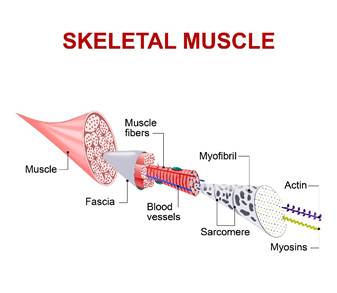
Fascia has three primary layers—superficial, deep, and visceral—each with different roles:
Fascia is key to healthy movement and stability, but it can become restricted or tight due to oral ties, injury, stress, or repetitive strain, leading to pain and limited mobility. For our purposes, we are focusing on superficial and deep fascia within the orofacial structures.
In directly addressing the fascia, or soft tissues of the face and jaw, we allow room for hydration to reenter the system and release tension.
The layering of myofascial releases and then facial stretches, such as the Beckman protocol, with active volitional exercises (tongue clicks) creates a more dynamic, complete approach.
Teaching a muscle to move correctly can feel wrong! You’ve never been in balance, and now your jaw is paying the price. Learning to move in harmony with balanced muscles and supportive, not restrictive fascia, can take some time.
But as you progress, you’ll feel less pain and tension in the TMJ. You will effectively be curing your TMD.
Diagnosing TMD vs TMJ: What Professionals Look For
Here’s where collaboration matters. If you suspect a TMJ disorder, you might see:
- A dentist trained in TMD -assesses bite and dental anomalies that may need to be addressed
- An oral surgeon- assesses the need for surgery to correct craniofacial or structural issues
- An ENT – assesses the joint for tenderness, range of motion
- A physical therapist – assesses and develops a treatment plan
- A myofunctional therapist -assesses and develops a treatment plan
- An airway-focused orthodontist -assess airway structures and need for palate expanders and braces.
We all see things slightly differently, but when you team up with someone trained to recognize tethered oral tissues and functional impairments, the picture becomes clearer.
To find a knowledgeable professional near you, try the preferred provider search organized by state at this website, Tongue Tie Life.
A full TMD assessment should include:
- Palpation of jaw and neck muscles
- Evaluation of the range of motion for the jaw and oral muscles
- Tongue mobility and strength assessment
- Breathing pattern assessment
- Posture and craniofacial structure
- Imaging (like CBCT or MRI, if needed) strictly done by a physician
TMD vs TMJ Treatment Approaches: The Functional Fix
Let’s break down a layered approach to healing:
1. Awareness and Education
Understanding the difference between TMD vs TMJ helps you advocate for better care. If you’re still unsure which one you’re dealing with, start by documenting your symptoms and their patterns.
2. Myofunctional Therapy
This is a foundational tool for retraining muscle function, correcting oral rest posture, and improving tongue mobility (especially if a release is planned).
3. Tethered Oral Tissue Release (Frenectomy)
If a tongue, lip, or cheek tie is impacting function, a surgical release—when done with proper pre- and post-op therapy—is a game-changer for reducing TMD symptoms.
4. Bodywork (MFR, Craniosacral Therapy, etc.)
Tension patterns often run deep. Gentle manual therapies can unwind chronic compensation, especially around the jaw, neck, shoulders, and pelvic floor.
5. Airway Evaluation
Is your jaw clenching a response to poor nighttime breathing? You might need a sleep study or airway imaging. Mouth breathing and TMD are often bedfellows. This may lead to snoring and sleep apnea at night.
6. Orthodontics (If Needed)
Jaw development may be restricted in adults due to long-term compensations. Airway-centered orthodontics can sometimes help restore balance, but timing is key. Each case is different; one may require palatal expansion prior to tongue tie release, while another needs release sooner.
Sometimes just knowing that these pieces are connected and that you may require more than one professional to address all the components can be the key to truly healing and curing your TMD.
Final Thoughts: TMD vs TMJ, Unraveled
So, what’s the verdict in the TMD vs TMJ debate?
- TMJ is the joint. You have one on each side, we all do!
- TMD is the disorder. You might have it.
- Tethered oral tissues and poor function? They’re the fuel feeding the fire.
If you’re an adult navigating chronic jaw pain, it’s time to stop looking at your TMJ like it’s the villain. It’s just the messenger. And if you listen closely, it’s probably telling you your body’s been compensating for a long time.
What Now? Start Here.
If this post hit home (especially if you suspect a tongue, lip, or cheek tie), check out my other articles on adult tethered oral tissues at Lynn’s Tied Together Hub Blog.
You’ll find:
– Step-by-step guides to assessing tongue ties
– Tips for choosing the right release provider
– Myofunctional therapy checklists
If you’re ready to get unstuck from the TMD cycle, consider booking a consultation with me. Relief is possible. You just need the proper roadmap—and I’ve got the GPS.