
Snoring isn’t just an annoying sound; it’s a signal. A red flag. A nightly alarm telling your body and brain that something is off with your airway. For millions of adults, the solution seems deceptively simple: mouth tape for snoring and voilà—no more snoring.
But as any professional in the field of myofunctional therapy will tell you, it’s not that simple.
Let’s unravel the full story of mouth tape for snoring, why nasal readiness is key, and how tethered oral tissues—like tongue tie and lip tie—play a much bigger role than you might expect.
The Rise of Mouth Tape for Snoring: Fad or Functional?
In recent years, mouth tape for snoring has gained popularity across wellness spaces. Instagram reels, TikTok testimonials, and even sleep influencers have jumped on the trend, showcasing themselves taping their lips before bed in the pursuit of better sleep.
The theory? If you tape the mouth closed, you’re forced to breathe through your nose, which is the body’s preferred method of respiration during rest.
This will reduce mouth breathing and hence reduce snoring.
Nasal breathing helps regulate nitric oxide production, maintains optimal oxygen exchange, and supports parasympathetic nervous system dominance (read: calm and restorative sleep).
But here’s the catch: just because you can close your lips doesn’t mean your nose can actually take over the job or that snoring will stop.
Mouth Tape for Snoring Starts with Nasal Readiness
Before anyone sticks that roll of tape across their lips, let’s talk about the gatekeeper of this whole process: your nasal airway. For mouth taping to work—and to be safe—you must be able to comfortably and consistently breathe through your nose, not just for a few seconds, but all night long.
Ask yourself:
- Can I breathe through my nose with ease during the day?
Oftentimes, you may not even realize how frequently you drift into open-mouth breathing. Be mindful over the next few days during everyday activities and do a check-in. When driving, take note of whether your mouth is closed. If you’re doing food shopping and lifting heavy groceries, does your mouth remain closed? At the top of the stairs when going to bed, are you breathing heavy, and is it through your mouth?
- Do I have frequent congestion, allergies, or sinus pressure?
Many people say, “Oh, it’s just allergies.” Winter allergies, spring allergies, summer allergies, and fall allergies! If your seasonal allergies last all year through every season, more may be going on!
- Do I wake up with a sore throat or sinus headache?
Waking up and feeling worse than when you went to bed may be a sign that nasal breathing is not operating at the highest level.
If the answer to any of those is “yes,” mouth taping at night may not be the fix, but rather a temporary bandage covering a deeper dysfunction.
As a trained speech-language pathologist and myofunctional therapist, I often guide patients through a daytime nasal training protocol first. This includes:
- Practicing closed-mouth nasal breathing while awake
- Taping for short intervals during the day while watching TV or doing light activities
- Monitoring comfort levels, nasal airflow, and anxiety responses
- Improving the tongue’s resting placement on the palate.
Only once consistent daytime nasal breathing is easy and effortless do we move on to nighttime use of mouth tape for snoring.
Forced nasal breathing with a blocked airway doesn’t lead to restful sleep; it leads to panic, mouth breathing anyway, or worse, disordered breathing events like apnea. We definitely want to avoid sleep apnea!
When the Problem Isn’t the Nose—But What’s Below It
Let’s say you are nasal ready- no allergies, no congestion, and consistent daytime nasal breathing.
Even if your nasal passages are clear and functional, you may still snore. Why? Because nighttime mouth breathing is often a symptom, not the root cause. That’s where the role of tethered oral tissues like tongue tie and lip tie comes into play.
The tongue is the control center of many functions, including breathing. If the tongue is bound to the floor by a tie, it does not regulate breathing as intended.
Tongue Tie and Snoring
A tongue tie, or ankyloglossia, restricts the lingual frenulum—the thin band of tissue under your tongue. When the tongue is restricted:
- It can’t rest against the roof of the mouth (which is essential for proper nasal breathing)
- Falls back during sleep, especially when lying on your back (possibly blocking the airway)
- Narrows the airway and increases the risk of vibratory breathing, aka snoring (vaulted palate that encroaches into the nasal cavity)
So if someone tapes their mouth but has an untreated tongue tie, the airway is still compromised. In some cases, this can even increase the risk of obstructive sleep apnea.
Lip Tie and Snoring
A lip tie occurs when the labial frenulum (the tissue that connects the upper or lower lip to the gums) is too tight or restrictive. While less notorious than tongue ties, lip ties can:
- Prevent the lips from fully sealing comfortably
- Cause gaps or tension when taping
- Lead to compensatory open-mouth postures
So, before using mouth tape to treat snoring, it’s essential to evaluate whether structural limitations—like tethered oral tissues—are setting you up to fail or, worse, increase your struggle to breathe in your sleep.
Tongue and lip tie can significantly impact snoring and sleep apnea. However, they are often overlooked when speaking to a doctor about how to best manage one’s airway.
Mouth tape is offered as a lesser commitment than CPAP; it’s a less cumbersome alternative! But still a band-aid, not a core solution.
Myofunctional Therapy: The Missing Link in Snoring Relief
If you’ve made it this far, you already know the answer isn’t slapping a piece of tape over your lips and hoping for the best.
The solution is functional, and that’s where myofunctional therapy enters the picture.
Myofunctional therapy is a whole-body, breath-centric approach that targets the muscles of the mouth, face, and airway to improve posture, tone, and coordination.
When treating adults who want to use mouth tape for snoring, we:
- Assess the readiness of the nasal airway
- Evaluate for signs of tongue tie, lip tie, or even cheek tie
- Train nasal breathing habits during the day
- Strengthen the tongue and oral musculature to support optimal airway posture
- Recommend surgical release of oral ties to free the muscles from restrictions
- Integrate gentle, progressive mouth taping strategies once the foundation is stable
This isn’t just about breathing. It’s about restoring balance, function, and freedom to the very systems that fuel sleep.
Adults have busy lives and are not always eager to participate in plans that may take up to 6 months to complete.
Which is why mouth tape seems like an easy fix upfront.
Myofunctional therapy helps us tune into why the dysfunction occurred at all, solving it from the root cause and restoring the function to where it was intended to be.
The Wrong Way to Use Mouth Tape for Snoring
Let’s bust a few myths while we’re here!
❌ Myth 1: Any Tape Will Do
Nope. Please don’t use duct tape, masking tape, or packing tape—unless you want a dermatology visit. Use tape designed for facial skin or specialty brands like:



Hostage Tape (yes, it’s a thing—and no, it’s not scary)
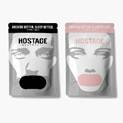
These are breathable, hypoallergenic, and made for sleep-safe adhesion.
Too pricey? You can try Kinesio tape or KTape, as it is often referred to. KTape typically comes in long strips, which you can easily cut into 4-6 mouth-sized strips.
For those who require more input to the jaw, KTape may be the answer. It allows you to tape over the lips vertically and down under the chin.
Your comfort is the answer to which tape is best! You may need to try a few before finding the best fit.
❌ Myth 2: Taping Will Instantly Cure Snoring
It won’t. If the issue is tethered oral tissues, weak airway tone, or nasal obstruction, taping might muffle the sound but won’t resolve the cause. Think of it as a tool, not a cure. It’s not a shortcut, but it may work well paired with an effective plan!
❌ Myth 3: Mouth Tape Is Dangerous for Everyone
Not necessarily. With proper screening, guidance, and preparation, many adults use mouth tape for snoring safely and effectively. The danger lies in bypassing the prep work.
A Step-by-Step Guide to Using Mouth Tape for Snoring
If you’re curious about trying mouth tape for snoring, here’s how I guide my adult clients safely into the practice:
Step 1: Nasal Airway Check
Start with a simple test:
Close your lips
Breathe through your nose for 2 minutes while seated
Can you maintain that without effort or panic?
If not, address the nasal airway first.
This could mean working with an ENT or allergist to reduce inflammation or correct obstructions. The nasal passages could be narrow, due to a vaulted palate, have turbinates crowding the passageway, or be inflamed from allergens.
Step 2: Oral Structure Screening
Get assessed by a myofunctional therapist for:
- Tongue tie- checking for posterior or anterior restrictions. Assessing the tongues range of motion, strength, and coordination for speech and swallowing skills.
- Lip tie- Checking upper and lower lips for any restrictions and the impact on range of motion and strength. Can the lips rest comfortably together?
- High narrow palate -After years of tongue tie, has the palate become vaulted, hindering the tongue’s ability to rest there with full contact?
- Mouth breathing habits – If lip and tongue ties are present, they have impacted the oral cavity negatively. Open mouth posture at rest or when chewing should be fully examined.
- Jaw – Is the jaw sliding or gliding out of the standard expected range as a compensatory adjustment to help weak oral fascial muscles?
If tethered oral tissues are present, consider a myofunctional therapy program to help prepare for potential release and improve oral posture. This program plan may take up to 4 months to complete.
Typically, 2 months before surgical release, surgical release with a preferred provider, then two months post-release to create new supportive patterns.
This may indeed cease snoring and open-mouth breathing on its own.
Step 3: Daytime Mouth Taping
Tape your mouth during the day while:
Reading
Watching a show
Doing dishes
Build tolerance before transitioning from resting (reading) positions to more active moving positions (doing the dishes/laundry/exercises) to nighttime use.
Once you feel comfortable with nasal breathing and closed mouth during the day, you’ll be cleared for nighttime use.
Step 4: Start Small
Don’t go full-mouth right away. Try:
Vertical strips (lip-to-chin)
Partial tape across the lips
Specialty tapes with breathing vents
Head to bed about an hour before your sleep mate. Have them check on you when they come to bed to ensure comfort and ease of sleep with the tape. Should they observe restlessness, strain, snoring despite the tape, tape gaps, or sleep apnea periods, then have them wake you and remove the tape.
No sleep companion? Check out apps like snorelab that can record what’s happening while you sleep. Set an alarm and wake on the first few nights to check how it’s going.
I often recommend starting this on a Friday evening so there is no work the next day, in case you experience disrupted sleep.
Work up to overnight wear only when you’re ready and have had positive feedback from a sleep mate or apps tracking your sleep.
Mouth Tape for Snoring: Who Should Avoid It?
Even with all the right steps, some people may not be candidates for mouth taping. These include:
People with untreated sleep apnea
Those with severe nasal obstruction
Individuals who wake gasping for air
Anyone with claustrophobia or anxiety triggered by facial coverage
In these cases, consult a sleep specialist, ENT, or trained myofunctional therapist to explore alternative routes.
Untying the Tethers: Why It’s Not Just About Sleep
Let’s zoom out.
When we think about mouth tape for snoring, we must look at the larger picture—the myofunctional matrix that includes the tongue, lips, cheeks, jaws, nasal airway, and even the diaphragm and pelvic floor.
Tongue tie, lip tie, and dysfunctional oral posture aren’t just sleep problems. They’re breathing problems, speech problems, digestion problems, and tension problems. And they don’t disappear just because you put a Band-Aid over your lips at night, even if it’s a cute pink stretchy one.
Mouth tape can be a powerful tool when used as part of a comprehensive plan to restore functional breathing. But that plan must include:
- Nasal breathing readiness
- Structural screening for tethered oral tissues
- Myofunctional therapy to build muscular tone
- Supportive lifestyle changes like nasal hygiene, posture work, and hydration
Because when your mouth and airway are finally working for you, not against you, snoring doesn’t stand a chance.
Final Thoughts: Is Mouth Tape for Snoring Right for You?
If you’re snoring, waking up tired, or dealing with dry mouth and tension headaches, mouth tape might be worth a try—but only with the right preparation. Don’t just silence the snore. Understand it. Treat it. And breathe better because of it.
At Lynn’s Tied Together Hub, we believe in unraveling the deeper ties that bind your health. Whether it’s a tethered tongue, tight lips, or a tired airway, we’re here to help you reconnect, release, and breathe easy.
Check out our resources page for free lip, tongue, and cheek tie self-assessments and get started on your journey to better health!