
You brush your teeth and look in the mirror every day. You have lived with your mouth, your smile, your breathing habits, and your oral tissues your entire life. So, if you’ve wondered if that little band of tissue is too tight or short, you likely also thought, “How Common Is a Lip Tie?”
Yes, there is a surprisingly good chance that you could have a lip tie and never know it.
One of the most common questions I hear from adults beginning their tethered oral tissue journey is, “How common is a lip tie?”
It is a fair question. After all, if lip ties are so important, why hasn’t anyone mentioned them before? Why didn’t your dentist identify it? Why didn’t your orthodontist discuss it? How come nobody connects your dry lips, mouth breathing, orthodontic relapse, facial tension, or difficulty maintaining a lip seal to a small piece of tissue hiding under your upper lip?
The answer is more complicated than most people realize.
The Truth
The truth is that many adults are walking around with lip ties that were never identified, never evaluated, and never connected to the symptoms they experience every day. In fact, the actual prevalence of lip ties in adults may be significantly higher than currently reported because so many adults have never been screened.
After more than 30 years as a Speech-Language Pathologist and myofunctional therapist, I have seen countless adults who spent years chasing symptoms without realizing they may have been compensating for oral restrictions all along.
Many of these adults were told their symptoms were unrelated.
They were told their dry lips were caused by dehydration.
Their snoring was simply aging.
Orthodontic relapse was bad luck.
Their jaw tension was stress.
Poor sleep was normal.
Yet when we evaluated the entire oral mechanism, including the upper lip, many discovered that the story was far more connected than they had ever imagined.
The question is not simply how common is a lip tie.
The better question may be this:
How many adults have a lip tie and simply do not know it yet?
How Common Is a Lip Tie in Adults?
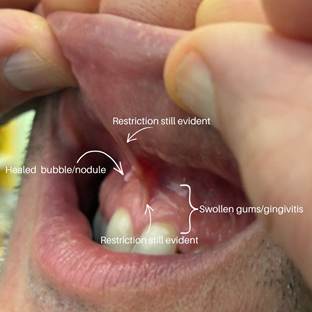
When researchers discuss lip ties, they often focus on infants and children. Unfortunately, that leaves a significant gap in our understanding of how common lip ties are in adults.
The reality is that there is no universal screening process for adult lip ties. Most adults have never had a comprehensive oral function assessment. Many healthcare providers are trained to look for major structural abnormalities but may not routinely evaluate the functional impact of a restrictive upper lip attachment.
Because of this, determining exactly how common a lip tie is among adults becomes difficult.
What we do know is that every person has a labial frenulum. This is the tissue that connects the upper lip to the gums. The presence of a frenulum is completely normal.
The question becomes whether that tissue restricts movement.
When the frenulum is unusually thick, short, broad, or restrictive, it may interfere with normal lip mobility and oral function. Some individuals experience minimal impact. Others develop years of compensation patterns that affect breathing, oral rest posture, swallowing, facial development, and even sleep quality.
As awareness of tethered oral tissues continues to grow, clinicians are discovering that many adults have restrictions that were never identified during childhood.
This is why the answer to “How common is a lip tie?” remains somewhat elusive.
The number is likely much higher than current estimates suggest because countless adults have never been evaluated.
Why So Many Adults Reach Adulthood With a Lip Tie Intact
Many adults assume that if they had a significant lip tie, someone would have noticed it years ago.
Unfortunately, that assumption is not always correct.
For decades, lip ties were often viewed through a very narrow lens. Unless an infant demonstrated significant feeding difficulties, many providers simply monitored the tissue or reassured parents that everything would be fine.
In many cases, the child learned to compensate.
The body is remarkably adaptable.
Children grow, learn new movement patterns, and often develop strategies that allow them to function despite restrictions. These adaptations may work reasonably well during childhood. The challenge is that compensation does not always equal optimal function.
A child who struggles to maintain a lip seal may become a chronic mouth breather.
A child who cannot achieve proper oral rest posture may experience altered facial growth patterns.
The child whose oral tissues are restricted may develop muscle compensations that persist into adulthood.
Over time, these compensations become normalized to them. Not knowing what a full range of motion feels like, you simply believe everyone feels this way when talking and eating.
The individual may notice things feel strained or tension-filled, but ignore it because they have never experienced anything different.
This is why so many adults are surprised when they discover they have a lip tie.
The restriction was not new.
It had simply been disregarded for decades.
The Hidden Cost of Compensation
One of the biggest mistakes people make when evaluating oral restrictions is assuming that a person must be experiencing severe symptoms for a tie to matter.
In reality, the human body excels at compensation.
When one muscle cannot perform its intended job efficiently, another muscle often attempts to help.
Over time, those compensation patterns become deeply ingrained.
Adults frequently tell me they can keep their lips together, so they assume they do not have a lip tie.
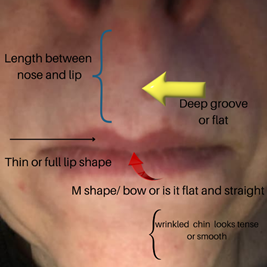
However, when we examine how they achieve lip closure, we often find excessive effort.
The chin dimples.
Their mentalis muscle contracts.
The lower face strains.
Their lips close, but only because additional muscles are working overtime.
This compensation may seem insignificant initially. However, years of unnecessary muscle activity can contribute to tension, fatigue, inefficient oral posture, and altered movement patterns.
The body often whispers before it screams.
The clues may be subtle for years before they become impossible to ignore.
7 Clues You Have a Lip Tie
Many adults discover their lip tie only after recognizing a collection of seemingly unrelated symptoms.
While no single symptom confirms the presence of a lip tie, certain patterns appear repeatedly among adults with oral restrictions.
Clue #1: Your Lips Feel Dry All the Time
One of the most overlooked clues is chronic dry lips.
Many adults spend years applying lip balm without questioning why their lips constantly feel dry.
The issue is not always hydration.
If you struggle to maintain a comfortable lip seal, your mouth may remain slightly open throughout the day or while sleeping. This increases evaporation and contributes to dryness.
The lip balm becomes a temporary solution while the underlying cause remains unaddressed.
Clue #2: You Sleep With Your Mouth Open
Sleep often reveals compensation patterns that are hidden during waking hours.
During the day, you may consciously keep your lips together.
At night, those compensations disappear.
Many adults with lip ties report waking with a dry mouth, dry lips, or a sensation that they slept with their mouth open.
Open-mouth sleeping can contribute to snoring, fragmented sleep, poor oxygen exchange, and morning fatigue.
When adults begin connecting these symptoms, they often start asking deeper questions about oral function and airway health.
Clue #3: Your Teeth Shifted After Braces
Few experiences frustrate adults more than watching years of orthodontic treatment slowly unravel.
You invested time.
Wore the braces.
You followed the instructions.
Yet your teeth moved again.
While multiple factors influence orthodontic relapse, oral posture plays a significant role.
The lips, tongue, cheeks, and surrounding muscles constantly apply forces to the teeth.
When oral function is compromised, maintaining orthodontic results becomes more challenging.
Many adults begin exploring lip ties only after repeated orthodontic concerns bring them searching for answers.
Clue #4: You Constantly Lick Your Lips
Lip licking often appears harmless.
However, chronic lip licking may indicate an attempt to compensate for poor lip closure or persistent dryness.
Ironically, frequent lip licking usually worsens dryness over time.
Adults often describe feeling trapped in a cycle of dryness, licking, temporary relief, and more dryness.
When this pattern occurs alongside other symptoms, it may warrant a closer evaluation.
Clue #5: Keeping Your Lips Closed Feels Like Work
For some individuals, lip closure happens naturally.
For others, it requires effort.
This distinction matters.
Try this simple observation.
Relax your face completely.
Can your lips rest together comfortably without strain?
Or do you feel tension developing around your chin or mouth?
Many adults discover for the first time that they have been working far harder than necessary to maintain a lip seal.
Clue #6: You Notice Tension Around Your Mouth and Chin
One of the most common compensation patterns I observe involves excessive activation of the mentalis muscle (in your chin).
The chin dimples.
The lower lip tightens.
The face works harder than it should.
This tension may become so familiar that individuals stop noticing it entirely.
Once they recognize the pattern, however, it often becomes impossible to ignore.
Clue #7: You Also Have a Tongue Tie
Lip ties and tongue ties frequently occur together.
If you already know you have a tongue tie, it may be worth evaluating your upper lip as well.
The oral mechanism functions as a team.
When multiple restrictions exist, each restriction can influence the overall system.
This is one reason comprehensive assessment remains so important.
Looking at one tissue in isolation rarely tells the whole story.
The Symptom That Finally Gets Adults Paying Attention
Most adults do not wake up one morning and decide to investigate whether they have a lip tie.
Instead, they begin searching for answers because of a symptom that refuses to go away.
For some, it is snoring.
For others, it is orthodontic relapse.
Some become frustrated by chronic dry lips, poor sleep, jaw tension, mouth breathing, or a feeling that something has never quite functioned correctly.
What I have observed repeatedly throughout my career is that the symptom that finally gets your attention is often not the symptom that started the problem.
That is one of the most important concepts I teach through Lynn’s Tied Together Hub.
The symptoms are connected.
They are not random.
A person may spend years focused on dry lips before snoring develops. Another individual may seek help for orthodontic relapse only to discover that oral posture and tissue restrictions have been influencing their mouth for decades. Someone else may begin their journey because they are exhausted from poor sleep and never suspect that the position and function of their lips could play a role.
The body is incredibly adaptable, but compensation comes with a cost.
Eventually, the body stops whispering and begins demanding attention.
That is often when adults finally begin connecting the dots.
Could a Lip Tie Affect Breathing, Sleep, and Snoring?
One of the most common misconceptions surrounding lip ties is that they only affect appearance or infant feeding.
In reality, the lips play a critical role in healthy breathing patterns.
The lips serve as the front door to the airway.
When the lips rest together comfortably, they support nasal breathing. Nasal breathing helps filter, humidify, and warm incoming air. It also promotes more efficient oxygen exchange and supports healthy oral rest posture.
When lip closure becomes difficult, the body may compensate by opening the mouth.
Many adults with lip ties report chronic mouth breathing, especially during sleep.
While a lip tie is rarely the only factor contributing to mouth breathing, it can become part of a larger pattern involving oral posture, tongue position, nasal breathing, and airway function.
This is where many adults begin to notice connections they had never considered before.
They wake up with a dry mouth.
Begin to snore.
They feel tired despite sleeping through the night.
Start to struggle with restless sleep or frequently wake feeling un-refreshed.
Again, a lip tie alone does not automatically cause these symptoms. However, when combined with other restrictions or dysfunctional oral patterns, it may contribute to the overall picture.
This is why a comprehensive evaluation is so important.
Rather than asking whether a lip tie is present, we must ask how that lip tie influences function.
How Lip Ties Influence Oral Rest Posture
One of the most overlooked aspects of oral health is oral rest posture.
Most people have never heard the term.
Yet oral rest posture influences the mouth for thousands of hours every day.
Oral rest posture refers to where the tongue, lips, and jaw naturally rest when you are not speaking, eating, or swallowing.
Ideally, the lips should rest together comfortably.
The tongue should rest against the palate.
The jaw should remain relaxed.
When restrictions interfere with these positions, compensation often develops.
Adults with lip ties frequently describe needing to “hold” their lips together. Others discover they habitually keep their lips slightly apart throughout the day. Some notice that they cannot achieve a comfortable lip seal without activating the muscles of the chin and lower face.
Over time, these altered postures can influence muscle balance throughout the entire oral mechanism.
The body always adapts.
The challenge is that adaptation is not necessarily the same as optimal function.
Many adults spend decades compensating without realizing how much effort their body is using simply to maintain basic oral posture.
The Connection Between Lip Ties and Facial Development
One reason discussions surrounding lip ties have become increasingly important is the growing understanding of how oral function influences facial development.
The muscles of the lips, tongue, cheeks, and jaw constantly interact with developing facial structures.
These forces do not disappear in adulthood.
Although the majority of facial growth occurs during childhood, functional habits continue influencing muscle balance and oral posture throughout life.
When adults look back at their history, many begin recognizing a pattern.
Perhaps they experienced orthodontic crowding.
Maybe they required multiple rounds of braces.
Perhaps they developed chronic mouth breathing habits early in life.
Some individuals report long-standing difficulties maintaining a comfortable lip seal.
Others describe years of tension around the mouth and lower face.
Again, no single symptom proves the presence of a lip tie.
However, when these patterns appear together, they often tell a larger story.
This is why evaluating oral function rather than simply examining anatomy remains so important.
The goal is not to find a tie.
The goal is to understand how the entire system functions.
Why the Real Number Is Probably Much Higher Than Reported
When people ask, “How common is a lip tie?” they are often looking for a percentage.
Unfortunately, the available numbers likely underestimate the true prevalence.
Why?
Because many adults have never been screened.
Many providers focus on symptoms rather than oral restrictions.
Many adults have compensated so effectively that nobody suspects an underlying issue.
And many individuals have never heard the term lip tie until they begin searching for answers themselves.
Think about it.
If a person has never been evaluated, they are unlikely to appear in prevalence statistics.
If a person has spent decades compensating successfully, their restriction may remain invisible.
Your medical provider does not routinely assess lip function; the tie may never be documented.
This creates a significant blind spot.
The question may not be how common is a lip tie.
The better question may be:
How many adults have a lip tie that has never been identified?
Based on what I see clinically, the answer is likely far more than most people realize.
But if you love numbers, here’s my conservative estimate. It is estimated that 184,000 infants are born each year with lip and/or tongue-tie. Let’s say half are missed, leaving 92,000 intact and unaddressed to grow into adulthood. Just looking at adults between the ages of 25-45 (20 years), we would estimate that 1,840,000 adults are walking around with a lip tie.
On a very conservative estimate, nearly 2 million people can have an adult lip tie between the ages of 25 and 45!
How Common Is a Lip Tie? What I Have Seen After More Than 30 Years in Practice
After working with oral function for more than three decades, I have become increasingly convinced that lip ties are frequently overlooked.
Not because providers do not care.
Not because patients are ignoring symptoms.
But because oral restrictions often hide behind compensation.
The body is incredibly resourceful.
People learn to adapt.
They find ways to swallow, breathe, and close their lips.
You find ways to function.
Eventually, those adaptations become normal.
That is why adults are often shocked when they finally identify a restriction.
They assumed their experiences were normal because they had never known anything different.
Many tell me some version of: “I thought everyone struggled with this.”
Then they learned that what they considered normal may actually have been compensation.
That realization often becomes the beginning of an entirely new journey.
Not Sure If You Have a Lip Tie?
If you are reading this article and recognizing yourself in these symptoms, you are not alone.
The good news is that you do not have to guess.
One of the easiest first steps is learning how to evaluate your own oral tissues and oral function.
That is exactly why I created my free Lip Tie Self-Assessment.
This guide walks you through simple observations designed to help you begin connecting the dots. You will learn how to look, feel, and assess for potential signs of restriction from the comfort of your own home.
The goal is not to diagnose yourself.
The goal is awareness.
Many adults tell me that performing a simple self-assessment was the moment everything finally started making sense.
When you understand what to look for, you begin seeing patterns that may have been present for years.
Conclusion: How Common Is a Lip Tie?
So, how common is a lip tie?
The honest answer is that nobody knows for certain.
While researchers continue studying prevalence, one thing is becoming increasingly clear: lip ties may be far more common than current statistics suggest. Conservatively, over 2 million adults may be dealing with the hidden symptoms of lip tie.
Countless adults are living with lip ties that were never identified in infancy, never evaluated during childhood, and never connected to the symptoms they experience today.
Some have compensated so effectively that they do not realize a restriction exists.
Others have spent years chasing symptoms without understanding the root cause.
The more awareness grows surrounding oral function, oral rest posture, breathing, and tethered oral tissues, the more adults are beginning to ask important questions.
If you struggle with dry lips, mouth breathing, difficulty maintaining a lip seal, orthodontic relapse, facial tension, poor oral posture, snoring, or other seemingly unrelated symptoms, it may be worth taking a closer look.
After all, the symptoms may not be random.
They may be connected.
And the answer you have been searching for could be hiding in a place you never thought to look.
Download the free Lip Tie Self-Assessment from Lynn’s Tied Together Hub and begin discovering whether a hidden oral restriction may be playing a role in your story.
Because no one deserves to live their life tied together.